FOUNDATIONS
It’s February, and things feel like they’re finally starting to wake up a little. The daffodils I planted last year are already pushing up through the ground, and even though it’s still pretty dark in the mornings, it’s a little less dark.
And with that momentum comes the work.
Being self-employed is a constant cycle of feast and famine, and both come with their own highs and lows. Managing those cycles takes work in itself, so rather than focus on surviving the famine I thought I’d use this space to share a bit about the current flood of things competing for my attention.
Different projects, overlapping timelines, and the many strands of my practice - from posting orders and delivering work to galleries, to painting murals, studio work, managing an annual festival call-out, and writing this blog.
I’ve been doing this for twenty years now, and even then, I can’t say I’ve perfected it. I still get stressed during the quieter periods, worrying that I might never work again - and I still say yes to things I later regret when I realise I’ve taken on too much.
But I am getting better at it. Slowly.
So I thought I’d share three things that help me stay on top of things when everything comes in at once.
The first thing I do is make lists. I’m obsessed with lists. For me, they’re always on paper. I used to have each month laid out above my desk so I could see it all visually.
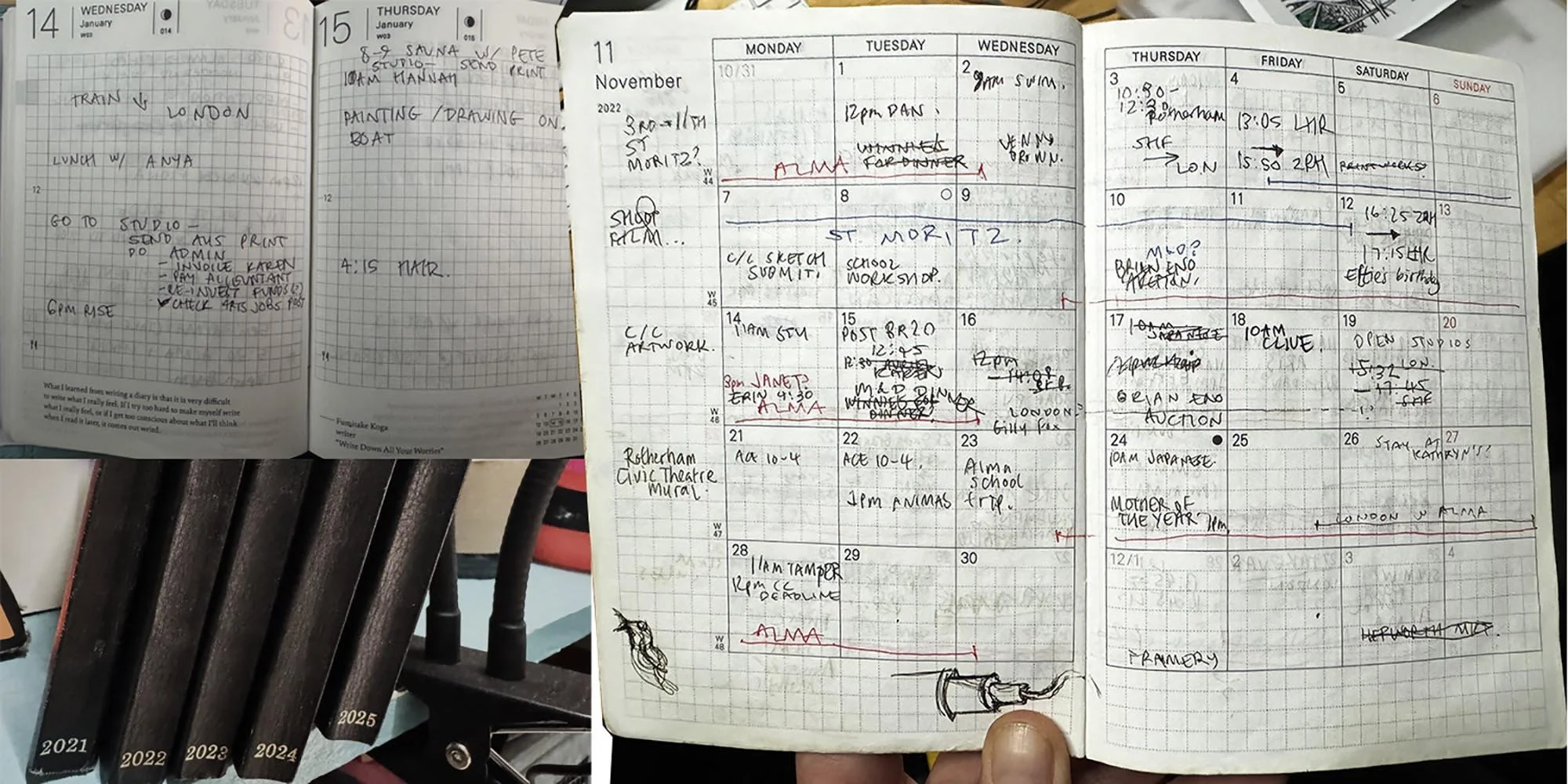
Alongside my calendars - which help me see how my days are spaced out and what’s happening when - I keep daily to-do lists. This is going to sound like I’m on commission (sadly I’m not), but the beautiful, pocket-sized Hobonichi diary has become I tool I genuinely can’t live without. I carry it everywhere, and as soon as something comes in, I can write it straight onto the month-per-view page and get a sense of what my capacity actually looks like.
I then use the day-per-page section to write my to-do lists, which helps me see clearly what needs doing each day and organise tasks in a realistic way. I include personal tasks as well as work ones - that way neither gets forgotten, because both have been given time and space. In the same way that journaling gets things out of your head and onto paper - it becomes more tangible to me
I don’t always get everything done, and I often move tasks to another day when I realise they won’t fit. But having everything written down means I can see when a list is becoming unrealistic, rather than just feeling overwhelmed without knowing why.
That leads me to my second strategy: putting boundaries around tasks.
When I need to send emails or work online, I’ll set aside a couple of hours and focus solely on the computer-based tasks in my diary - replying to messages, finalising applications, and tying up loose ends.
Once I close my laptop, I move on. Recently, that meant cycling into Clapton and spending time writing in a café, pausing along the way to take photographs and gather inspiration.
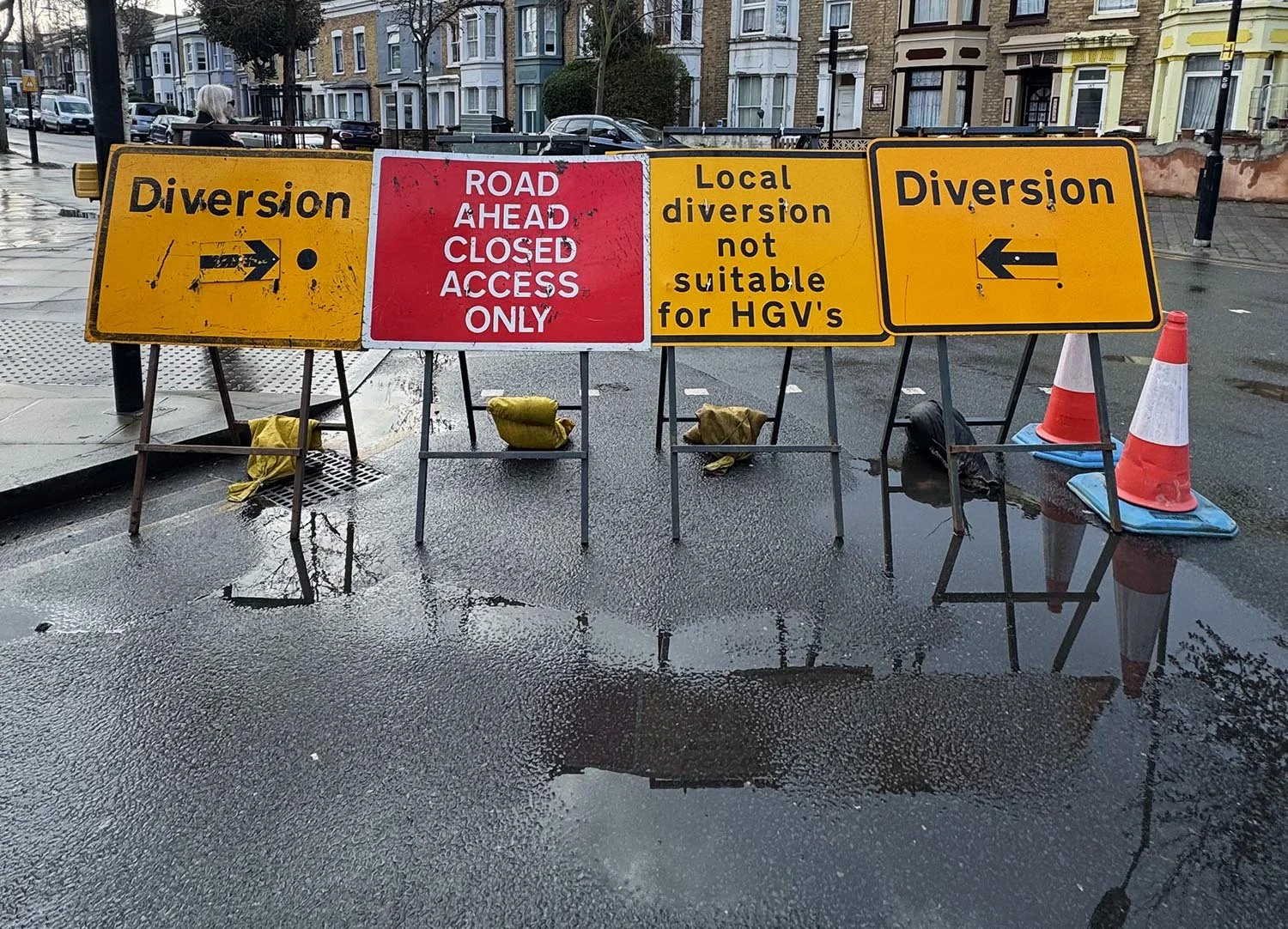
Clear boundaries
It might sound like a small thing, but knowing what needs to be done - and creating clear boundaries, times, and locations for each task - makes a huge difference. I don’t waste time staring at a screen when there’s nothing to do, and I don’t feel guilty about taking space for thinking and inspiration.
Scheduling time off is just as important as scheduling work. Filling every minute can feel satisfying at first, but knowing you can spend an hour drinking coffee with a friend - because you’re clear on what needs doing and when - is key to avoiding burnout and being more effective when you are working.
Other days might see me in the studio or on-site painting a mural all day, with time later that evening or the following morning for emails. Writing things down allows me to see an email, note when I’ll reply, and then let it go - so I don’t have to carry it around in my head and can focus properly on the task in front of me.
The final thing I’ll share - and probably the hardest to learn and really implement - is delegation.
It doesn’t come naturally at first, and it requires building relationships with people you trust. But when things get busy, finding others to take on tasks you don’t need to do yourself can make all the difference.
Once I was earning enough to survive, I hired an accountant. I started by doing most of the work myself and handing it over to be checked, and over time moved towards a fully automated system supported by their expertise.
The same happened with screen printing. I enjoyed doing it myself and valued the learning process, but eventually realised that professionals could do a better job - freeing up more of my time to focus on making original work.
When I create murals, I always work with other artists. It distributes the workload and builds a community that grows and supports itself. Over the years, I’ve built an incredible team of people who help with everything from painting, to wrapping and sending prints, to studio administration.
All of this has taken time - and a lot of trial and error - to learn. I still get it wrong regularly. But I’ve learned that staying afloat isn’t about doing everything yourself, or doing it perfectly. It’s about building systems - and relationships - that support you when things get busy.
If you’re in a season where everything feels like it’s coming at once, I hope some of this is useful. And if you’re in a quieter stretch, trust that this part of the cycle won’t last forever. Momentum builds slowly - sometimes before you can see it.