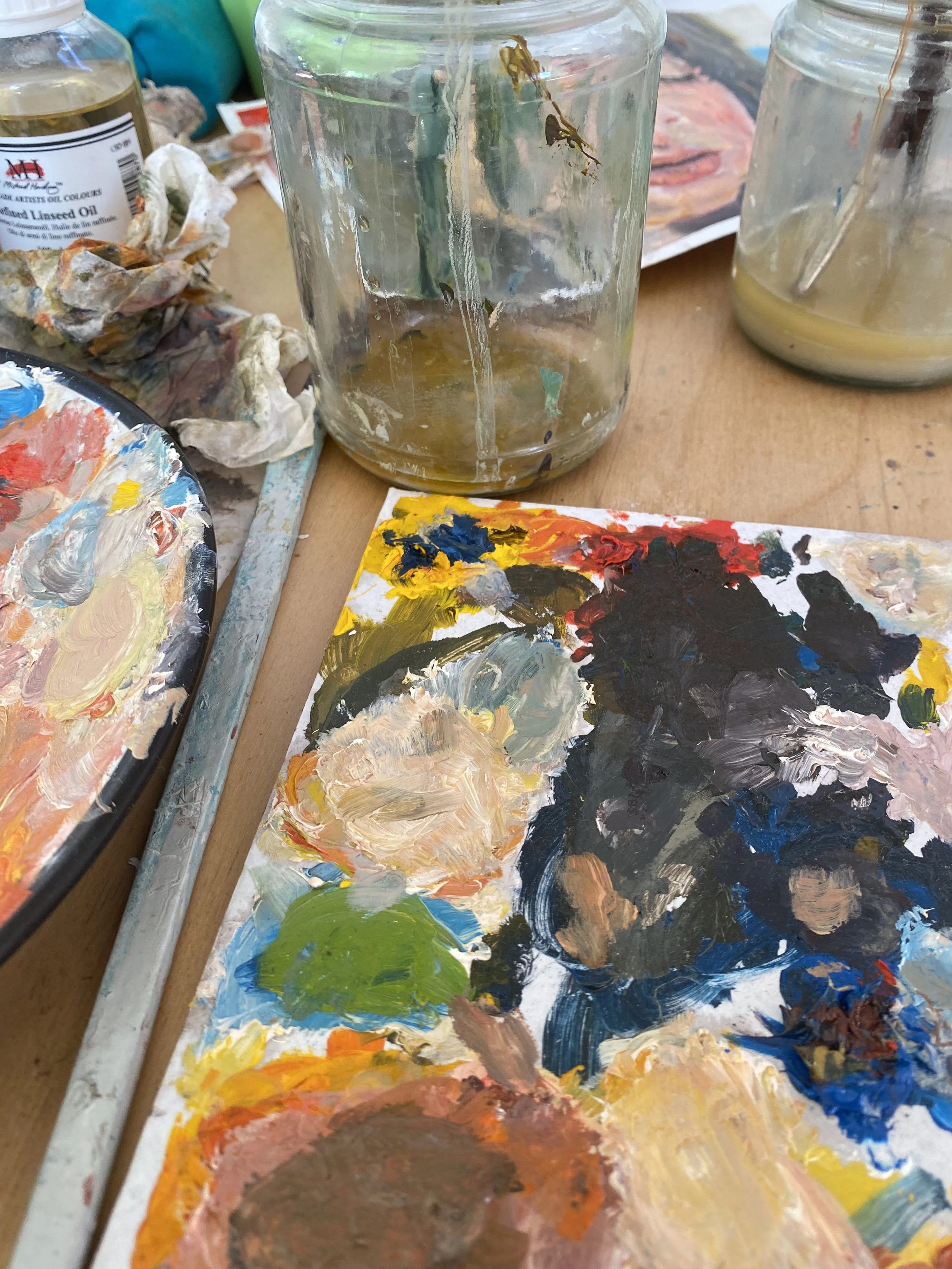
REBUILDING
I have spent my career documenting cities in transition. I am fascinated by scaffolding, cranes and the broken frames of buildings under construction. There is something about the dusty, chaotic process of demolition - just as there is in the resilient weeds and wild plants that crack through the concrete. I've always found a quiet beauty in those moments between what a building was and what it is about to become, whether being rebuilt by human hands or reclaimed by nature.
Recently, I’ve been reflecting on how that process happens internally. It’s all linked of course: the buildings, the change, the demolition and the rebuilding - the city as an archetype for the human condition.
The trust required to tear something down before you know exactly what will replace it.
We spend years constructing identities, routines, relationships and ambitions, only to find that every so often life has other plans. Something shifts. Something ends. Something we thought was permanent reveals itself to be temporary.
The last year has felt a little like that.
Alongside moving studios, rebuilding my life in London and navigating some significant personal changes, I’ve found myself in a prolonged period of creative block. It’s been disorientating. On the surface, things appeared to be moving forward. My work was hanging on the walls of exhibitions. Opportunities continued to arrive. Yet internally, I felt disconnected from my work and my creativity. Paintings that would normally take shape quickly seemed to stall after the first few marks.
For a long time, I interpreted that feeling as failure.
I recently completed Julia Cameron’s The Artist’s Way, a twelve-week programme designed to nurture creativity. I began it hoping it might help me get unstuck. What I didn’t expect was that it would change how I understood the block itself.
Through the discipline of Morning Pages, I began to realise that perhaps nothing had gone wrong at all. Spending hours at the canvas creating new work requires space, mentally and physically and when that space is compromised it is natural to need to take a pause.
The energy I would normally pour into making work was being used elsewhere. My sketchbooks became filled with lists rather than drawings. I would sit down in the studio only to find my mind drifting back to practical decisions, logistics and loose ends that needed attention. My inability to create wasn’t a failure of discipline. It was part of a much larger process of reconstruction.
Just like the urban landscapes I paint, perhaps new foundations cannot be laid until the old structures have been cleared away.
We live in a culture that celebrates constant momentum. As artists, we're often expected to move seamlessly from one project to the next, always producing, always progressing, always presenting an image of effortless productivity.
But life doesn't work like that. Artistic practice has seasons and we can’t expect to regenerate overnight.
In a world that feels so chaotic, it can feel almost indulgent to focus on creativity - as the news blares stories of conflict and anger and things spin in different directions that don’t feel fully comprehensible right now. How is getting in touch with child-like wonder going to help anything? Aren’t children immature and irresponsible?
But then I think about the projects I've been involved with through In Place of War, where art is helping communities affected by conflict, climate change and inequality. The more I learn about the role of creativity in wellbeing and social change, the more convinced I become that art isn't a luxury.
It is one of the ways we stay connected to ourselves.
One of the ways we remember who we are.
In The Artist's Way, Cameron talks about the importance of the Artist Date - a weekly solo adventure designed to replenish the creative well. When I’m blocked, the instinct is often to push harder. To spend longer in the studio.
The Artist date is the part I find hardest about The Artist’s Way. Allowing that space and not feeling guilty somehow. But you cannot draw from an empty well.
This half-term, instead of trying to manufacture inspiration, I packed up the van, and drove away to the coast with my daughter.
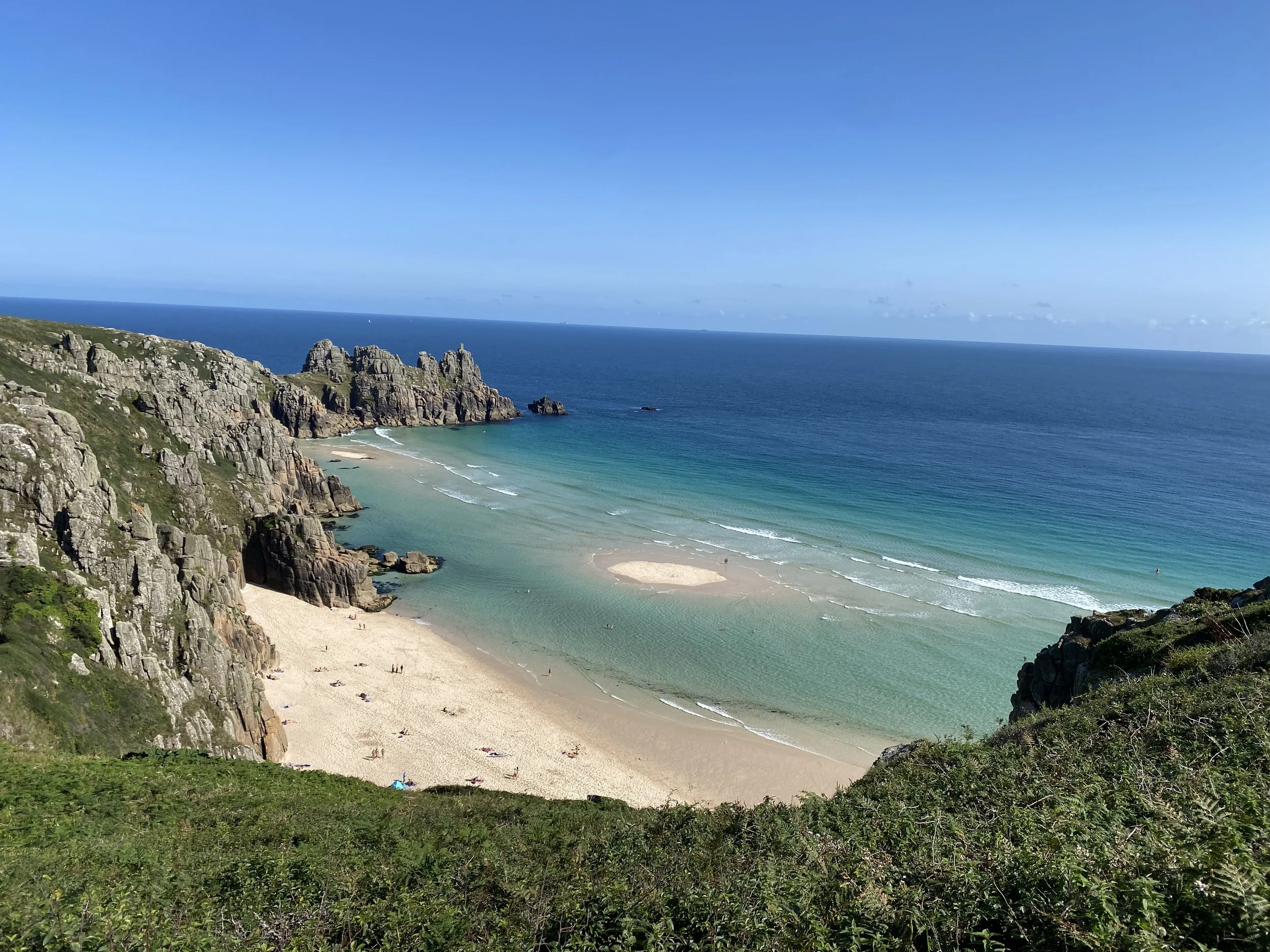
The sea has always been a sanctuary to me. Cold water is a shock to the system and pulls me into the present moment. For a few moments, there is just the horizon, the weight of the water and the rhythm of the waves.
The worries about sales. The uncertainty of starting again. The pressure I had been placing on myself to have everything figured out, washed away in the salty sea.
It struck me that creativity is not a fixed structure. It moves. It shifts. It disappears from sight and returns again. Like the tide, it follows rhythms that cannot be controlled.
Stepping back onto the beach, wrapped in a towel with sand between my toes, I felt something beginning to soften. A curiousness about what is next.
For years I’ve been painting the weeds and wild plants that relentlessly crack through pavements and buildings creating unplanned green ruptures in the grey of the city. A visual example of letting go of control. We spend so much time laying down rigid plans and trying to keep things tidy and predictable. But life doesn’t work like that - it is vital and untamed. There is a beauty that comes from letting go and trusting what will break through the cracks when we stop holding on so tightly.
Because breaking through a block doesn’t necessarily mean a sudden burst of inspiration, a breakthrough moment or a finished collection. Just a quiet sense that perhaps I don’t need to have all the answers right now. Perhaps the answer is simply to trust.
To trust that creativity will return when it is ready. That rebuilding is happening even when it isn't visible.
Because even through the darkest of moments, I’ve been grounded by moments of wonder. When the heart opens up to the quiet beauty of the world and there you are - connected to everything and everyone via something much bigger than yourself.
Art isn’t something that you can just turn up to and create, it is something more visceral than that. Creative work mines your soul and when you are feeling depleted and without foundations, then it makes sense that the work doesn’t flow.
Right now, I am choosing not to run before I can walk. I am returning to my studio with a lighter grip on the brush and a deeper trust in the process. The lines will come back when they are ready. For now, it is enough to just watch the scaffolding go up, step by step.
Each time I gaze at the flourishing leaves on a stubborn little plant as it grows through the crack of a wall, my heart fills with wonder; I know I am one step closer to finding myself again.